
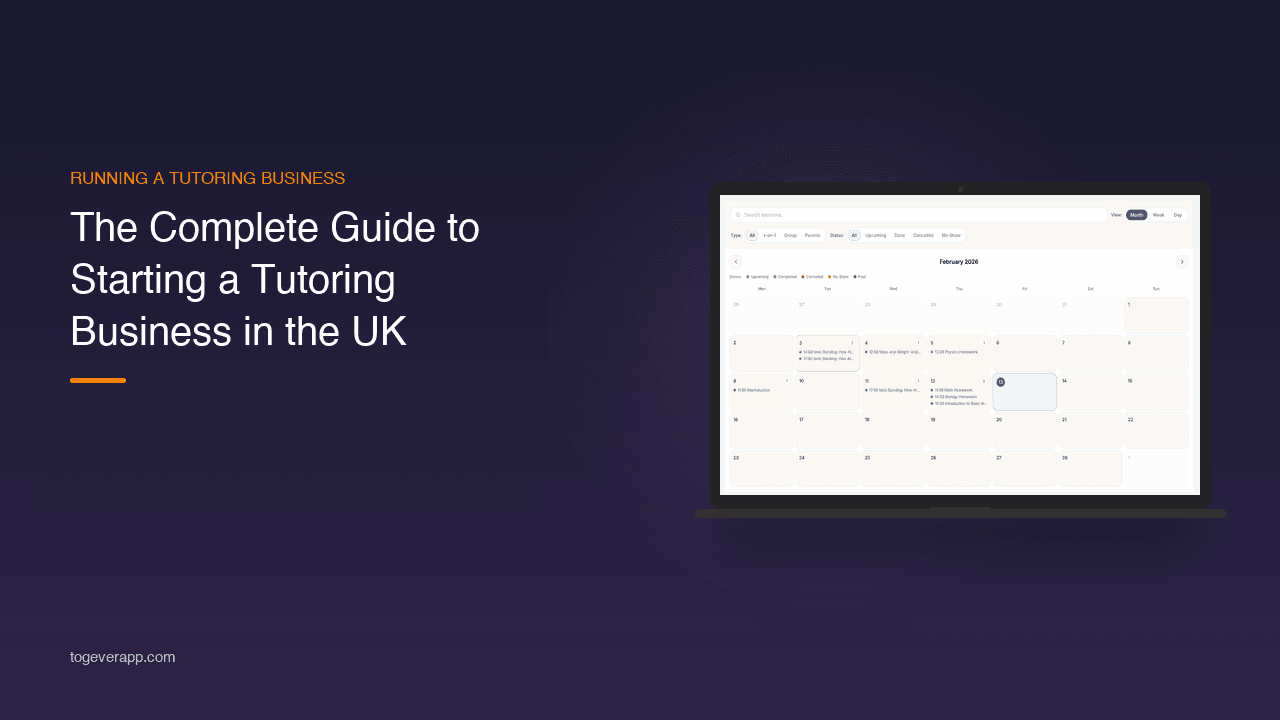
Starting a tutoring business in the UK can be incredibly rewarding — both financially and personally. Whether you're a qualified teacher looking for flexibility, a subject expert wanting to share your knowledge, or an entrepreneur spotting an opportunity in education, this guide covers everything you need to know.
Is tutoring right for you?
Before diving into the logistics, consider whether tutoring aligns with your skills and goals. Successful tutors typically have:
- Subject expertise — deep knowledge in at least one subject area
- Communication skills — the ability to explain concepts clearly to different learners
- Patience — students learn at different paces
- Reliability — parents and students depend on you showing up
- Business mindset — you'll be running a small business, not just teaching
Legal requirements in the UK
The good news: you don't need formal qualifications to become a tutor in the UK. However, there are several legal considerations:
1. Register as self-employed with HMRC
If you earn more than £1,000 from tutoring in a tax year, you must register as self-employed with HMRC. This is straightforward and can be done online. You'll need to:
- Submit a Self Assessment tax return each year
- Pay Income Tax on your profits
- Pay National Insurance contributions (Class 2 and Class 4)
2. DBS check (Enhanced)
If you're tutoring children or vulnerable adults, an Enhanced DBS (Disclosure and Barring Service) check is essential. While not legally required for self-employed tutors, most parents will expect to see one. It demonstrates safeguarding awareness and builds trust.
You can apply through an umbrella body like uCheck or Due Diligence Checking. Cost is typically £40-60.
3. Insurance
Consider getting:
- Public liability insurance — covers accidents or damage during sessions (especially important if tutoring in homes)
- Professional indemnity insurance — covers claims of negligent advice or service
Policies specifically for tutors start from around £50-100 per year through providers like Hiscox or Simply Business.
Setting your rates
Pricing is one of the trickiest decisions for new tutors. Charge too little and you undervalue your service; charge too much and you may struggle to find clients.
UK tutoring rates in 2025
Current market rates vary by subject, level, and location:
- Primary school (KS1-2): £25-40/hour
- Secondary school (GCSE): £30-50/hour
- A-Level: £40-60/hour
- University/specialist: £50-100+/hour
London and the South East typically command higher rates. Online tutoring can sometimes justify premium rates due to convenience.
Factors to consider
- Your qualifications and experience
- Subject demand (maths and sciences typically command higher rates)
- Preparation time required
- Travel time and costs
- Local competition
Finding your first clients
The hardest part of starting out is getting those first few students. Here are proven strategies:
1. Word of mouth
Tell everyone you know — friends, family, former colleagues. Personal recommendations are the most trusted form of marketing. Ask satisfied clients to refer you to others.
2. Local advertising
- School notice boards (with permission)
- Community Facebook groups
- Nextdoor app
- Local coffee shop notice boards
- Leaflets in letterboxes
3. Online platforms
Tutoring marketplaces can help you find clients quickly:
- Tutorful
- Superprof
- First Tutors
- MyTutor
Note: These platforms typically take a commission (15-25%) or charge subscription fees. They're useful for building initial client base, but long-term you'll want direct clients.
4. Your own website
A simple website establishes credibility and helps parents find you through Google searches. Include:
- Your background and qualifications
- Subjects and levels you teach
- Your approach to tutoring
- Testimonials (once you have them)
- Contact information and booking method
Online vs in-person tutoring
The pandemic accelerated the shift to online tutoring, and many tutors now offer both options. Each has pros and cons:
Online tutoring
Pros: No travel time, wider geographic reach, recording options, flexible scheduling
Cons: Technical issues, harder to build rapport with younger students, requires reliable internet
In-person tutoring
Pros: Easier to engage students, better for hands-on subjects, stronger relationship building
Cons: Travel time and costs, geographic limitations, less flexibility
Tools you'll need
Running a tutoring business requires more than just teaching skills:
Essential tools
- Scheduling system — to manage bookings and avoid double-booking
- Payment processing — for invoicing and receiving payments
- Video conferencing — Zoom, Google Meet, or similar for online sessions
- Resource storage — somewhere to keep worksheets, notes, and materials
Nice-to-have tools
- Progress tracking — to show parents their child's improvement
- Automated reminders — reduce no-shows with session reminders
- Digital whiteboard — for online sessions
Simplify with Togever
Instead of juggling multiple tools, Togever brings scheduling, payments, progress tracking, and parent communication into one platform built specifically for tutors.
See how Togever works →Keeping parents informed
Parent communication is often what separates good tutors from great ones. Parents want to know:
- What their child covered in the session
- How their child is progressing
- What they can do to help at home
- Any concerns or areas needing attention
Regular updates — even brief ones after each session — build trust and lead to longer client relationships. This is where many tutors struggle to keep up, especially as they take on more students.
Scaling your tutoring business
Once you've established yourself, you might want to grow. Options include:
1. Raise your rates
As demand increases and your reputation grows, incrementally raise your prices. Existing clients will often accept modest increases for continuity.
2. Specialise
Become known for a specific niche — 11+ exam prep, A-Level physics, university applications. Specialists can command premium rates.
3. Hire other tutors
If you're turning away clients, consider building a small team. This transforms you from a tutor into a tutoring business owner, with different challenges (recruitment, quality control, scheduling).
4. Create digital products
Recorded courses, workbooks, or study guides can generate passive income alongside your tutoring.
Common mistakes to avoid
- Undercharging — it's easier to lower rates than raise them. Start where you're comfortable but don't undersell yourself.
- Over-promising — be realistic about what tutoring can achieve. Improvement takes time.
- Poor record-keeping — track income, expenses, and sessions from day one. Your future self (and HMRC) will thank you.
- Neglecting parent communication — parents are your clients, even though students are your students. Keep them informed.
- Burnout — tutoring is rewarding but demanding. Set boundaries around your availability.
Getting started today
Starting a tutoring business doesn't require a huge investment or months of preparation. Here's a simple action plan:
- This week: Register as self-employed with HMRC. Apply for your DBS check.
- Next week: Set your rates. Tell your network you're available for tutoring.
- This month: Get your first client. Focus on delivering an excellent experience.
- Next month: Ask for a testimonial. Set up basic systems for scheduling and payments.
The tutoring market in the UK continues to grow, with parents increasingly willing to invest in their children's education. There's never been a better time to start.
Need a better way to manage your tutoring business? Togever helps tutors handle sessions, payments, and parent communication in one place. Start your free 30-day trial.